Wednesday, June 21, 2023

The Electronic Brevet Card: eBrevet


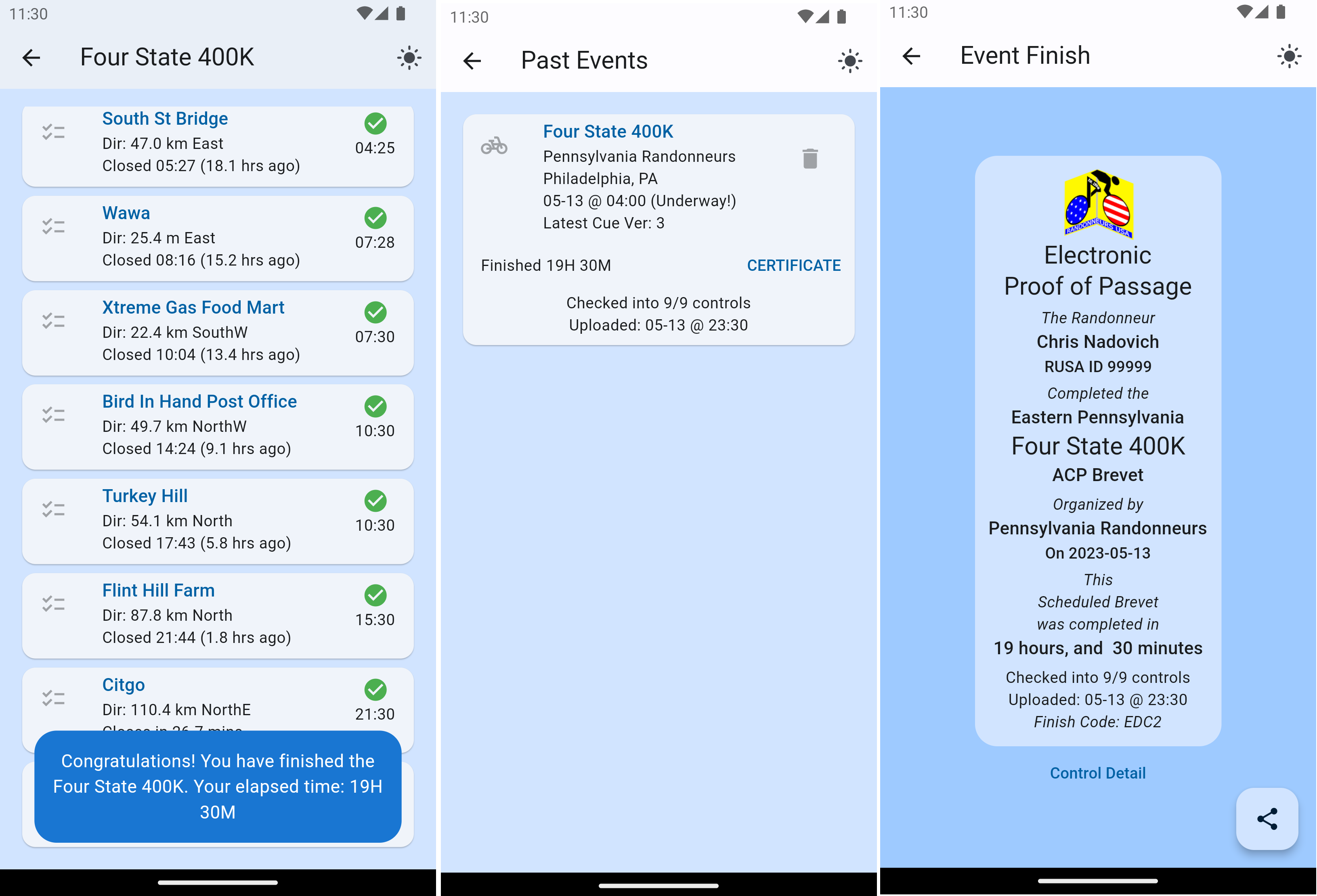
eBrevet is an open-source Android/iOS app that serves as an automated brevet card providing control check-in on a randonneuring brevet or permanent. It maintains some of the "feel" of the traditional paper brevet card process. The app only needs to be activated at controls and does not require Internet data service at controls. Using the phone's clock and GPS, the app determines if you are near a control (within 500 meters). If a nearby control is open, you can record your authenticated check-in within the app. When network access happens to be available, the app will report these control check in times to the PA Rando server, which will be visible in real time on the roster page. When the event is completed successfully,  the app can automatically upload results to the PA Rando records, and generates a unique Proof of Passage Certificate that is sharable on social media.

You can find the app on both the Apple Store and the Google Play Store. Search for "eBrevet" by "CTNadovich".  Please make sure you are using the latest version of the app.  Control checkins or event downloads will not work if your app is outdated.

Detailed rider instructions for the app are available here. 

This app does not eliminate your need for a paper brevet card. 

You will still need a paper brevet card to start an event because the paper card has the start code required by eBrevet. Make sure you have the latest version of the app and the latest version of the events downloaded into the app. The most common reason a start-code isn't accepted by the app is because either the events cue sheet has changed recently and you need to download the latest event info, or the app is out of date.

Once you use the start code to start your ride with eBrevet, you can use eBrevet exclusively on the ride without needing to get merchant signatures, answer info questions, or take photos.  Just ride the bike, and when you get to a control, click the button on eBrevet to check in. Then ride on.

You also still need a paper brevet card to finish an event. At the finish, you must write your time of arrival at the finish control, and the finish code from the app onto the paper card as proof you completed the ride,  you also need to sign the card, and return the card to the organizer.  

In summary, when using eBrevet you must

  1. Obtain the start code from your paper brevet card and use it to start the app
  2. Open the app at each control and press the Check-In button
  3. After checking in at the finish, record your finish time and finish code from the app onto your paper brevet card,  sign your card,  and return the card to the organizer. 

Remember: if you are using the eBrevet app for proof of passage, at the finish of an event the following three things must be written on your paper brevet card:

  • Your finish time.
  • Your signature.
  • The FINISH CODE from the app.

If you used eBrevet and these three things are not on your brevet card, you can be disqualified.  Also, if you "forget" to check in at a control the app will always notice. You will NOT get a finish code. The app will give you a DNQ.  You must not skip any control. If you miss a control, you need to go back and check in (either with the app, or with traditional signature/receipt). If you skip controls you could be disqualified.

That is the basic plan, and we really want to stick with it. However, given that cell phones do sometimes fail, and software does sometimes have bugs, prudent riders using eBrevet also write onto their paper brevet card their time of arrival and "control check in codes"  from the app at each intermediate control  as a paper backup.  Writing down your time and these codes isn't required -- it's simply prudent. If you think your phone is about to fail, battery die, or the app is acting wonky, record all check-in codes and be ready switch to old-school brevet card control check-in processes (get merchant initials, receipts, etc...) for the remainder of the event. The RBA will not accept 'my phone died' and a blank card as proof of passage. 

Enjoy the blessings of technology in this app, but keep in mind that this is still randonneuring. Per our traditions, you as a rider must check-in at controls and must provide the required proof of passage for your ride.

Using eBrevet  is completely optional for riders at this time. And  it will remain optional for most "front country" events so long as I'm RBA.  If you want to continue to use traditional brevet card control check-in processes, you still may.

I believe the new option of eBrevet  is a fun and satisfying application of technology to our sport. I hope you enjoy it. 


Tuesday, June 6, 2023

Jim Thorpe 600K (and TK 200) Ride Report

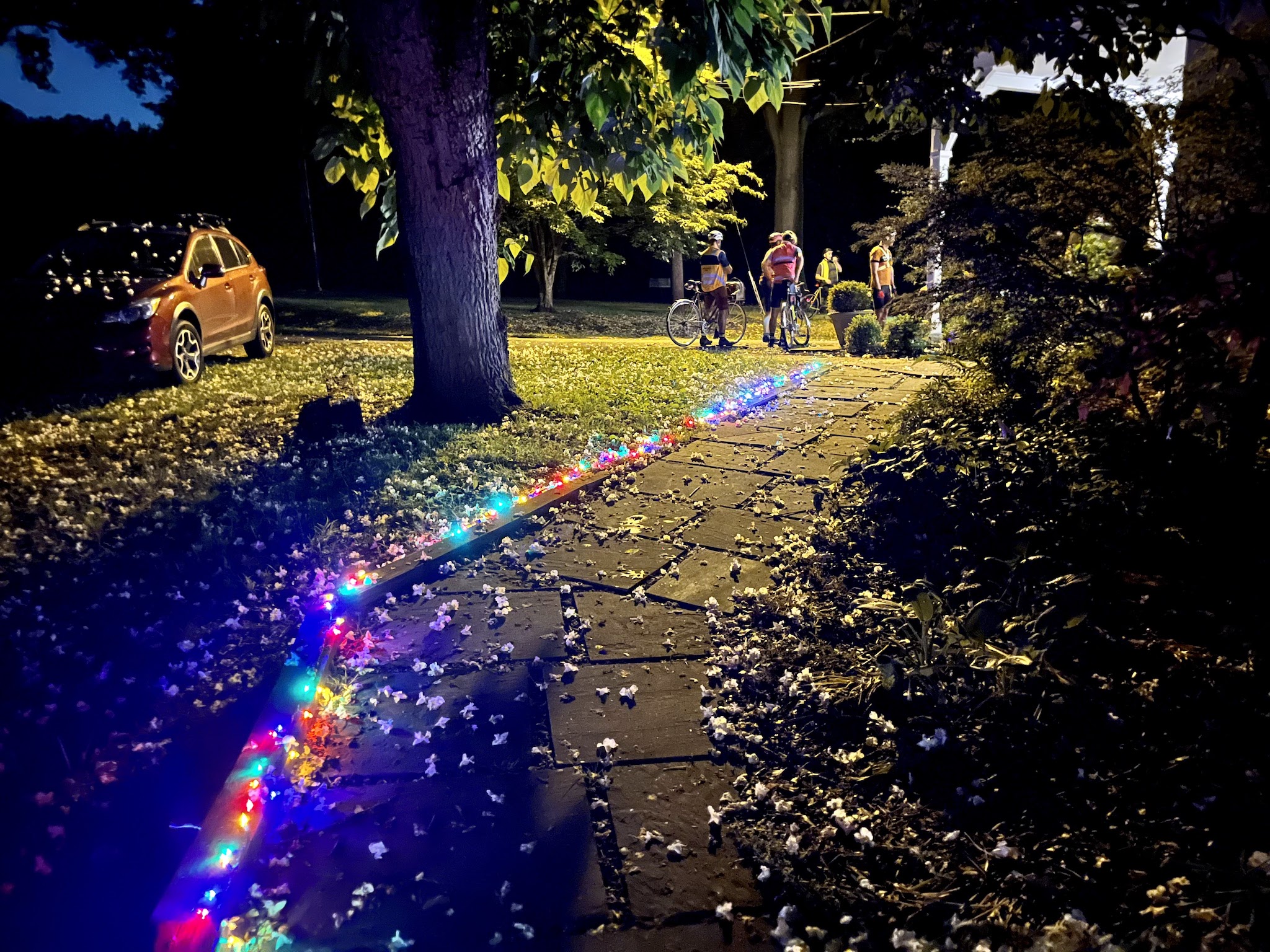
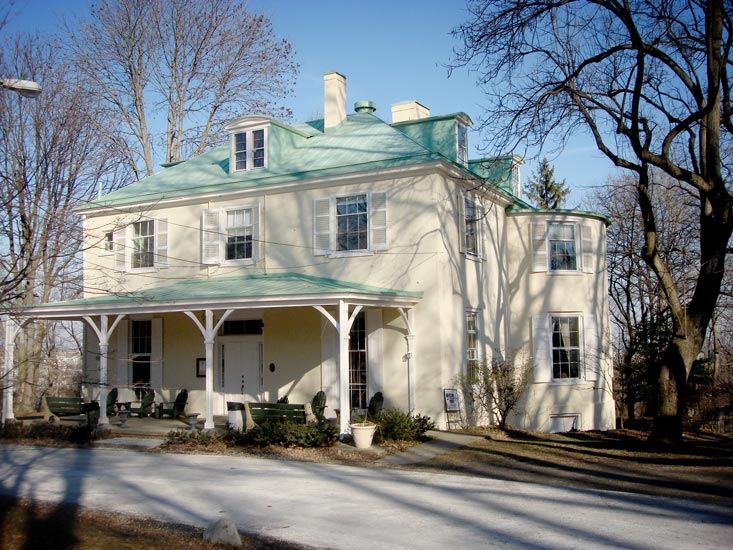
The Final event(s) in the 2023 Super Randonneur Series, the Jim Thorpe 600K and TK 200K were held in the Chamounix Mansion rather than the usual Carriage House. This was a welcome upgrade as the Mansion has more bedrooms, more interesting places to hang out that are well separated from the sleeping areas, and somewhat more secure parking options. It also looks pretty.

The Chamounix Mansion was a magical upgrade as Start/Overnight/Finish control.

Of those that clipped in at the front porch of the Mansion for the challenging  600K course, 21 of 24 finished (88%). On the Tscheschter Kaundi 200K, 100% of the riders, 23 of 23, finished in good time. Congratulations and well-done to all!  Preliminary results have been posted for the 600K and the 200K.  Please review the results and let me know if they align with your memory.  The results will be submitted to RUSA after review and will become official once certified. Given this is a PBP year, results submission will happen very quickly.

The weather was decent for a 600K. Certainly there was less issue with rain than the other events in the SR series, which all seemed to be held in monsoon conditions. Everyone was glad that the 90F heat on Friday had vanished by the early Saturday start time. The temperatures were moderate all weekend. Things got pretty nice on Sunday., and it only rained briefly on Saturday -- albeit pretty heavy in places. Unparalleled in their ability to find in the worst weather,  Nicole and Soph took shelter in Len Zawodniak's car during a downpour. 

Congratulations to our fourteen PA Super Randonneurs for 2023.

    Nicole Aptekar
    Travis Berry (2)
    Tristan Dahn
    Cecilie Gaffney (6)
    Patrick Gaffney (6)
    Benjamin Keenan (2)
    Chris Kline
    Bryce Lackey
    Greg Lang
    Brad Layman (3)
    Bill Scanga (2)
    Ello Shertzer
    Ryan J Stanis (3)
    Ben Thompson (2)

For six of these riders Nicole Aptekar, Tristan Dahn,  Chris Kline, Bryce Lackey, Greg Lang, and Ello Shertzer this was their first SR: welcome to Super Randonneuing!  Some of these newly minted Super Randonneurs are headed to PBP. With this tough series under your belt, you will have no problem at PBP.

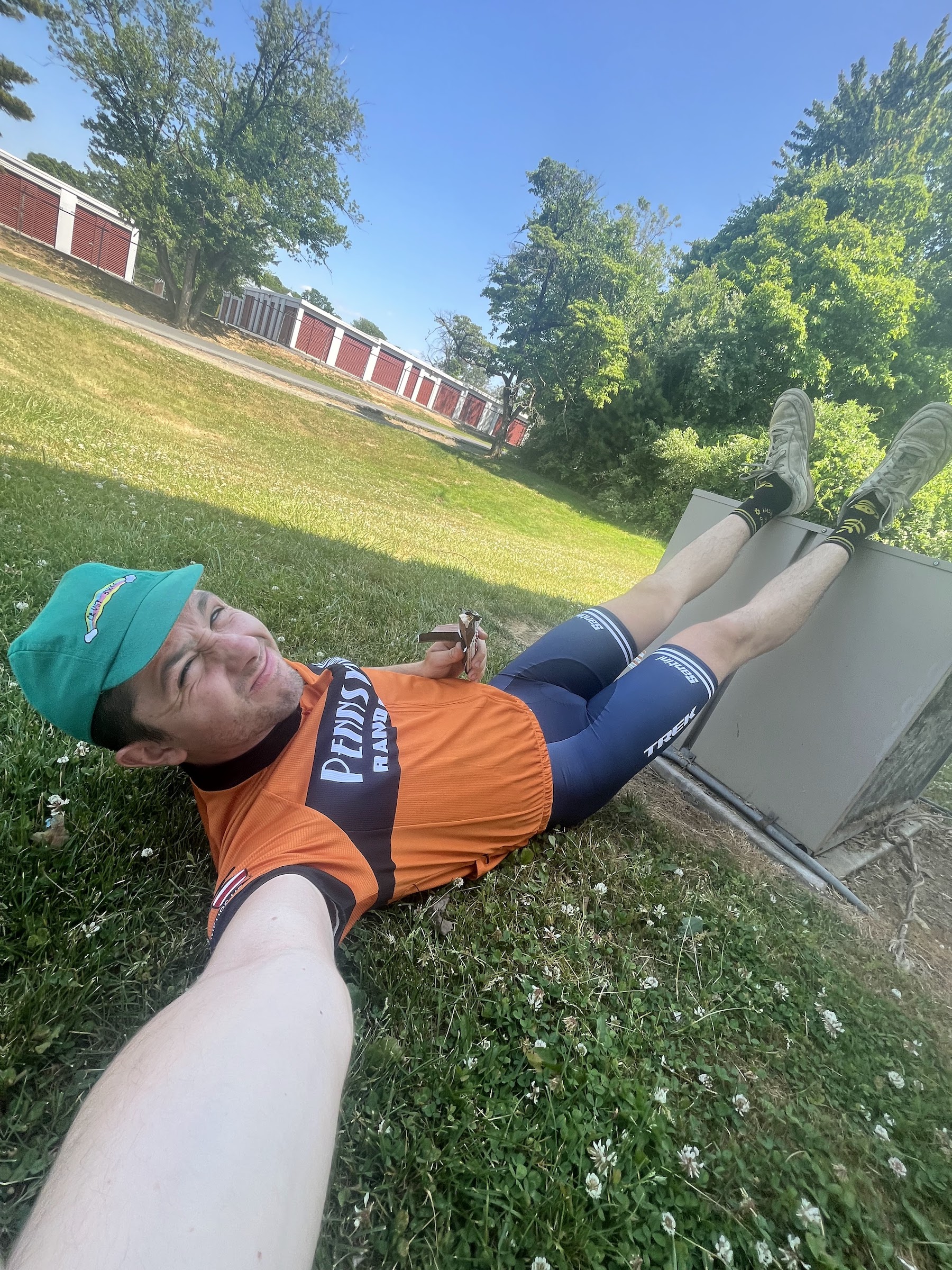
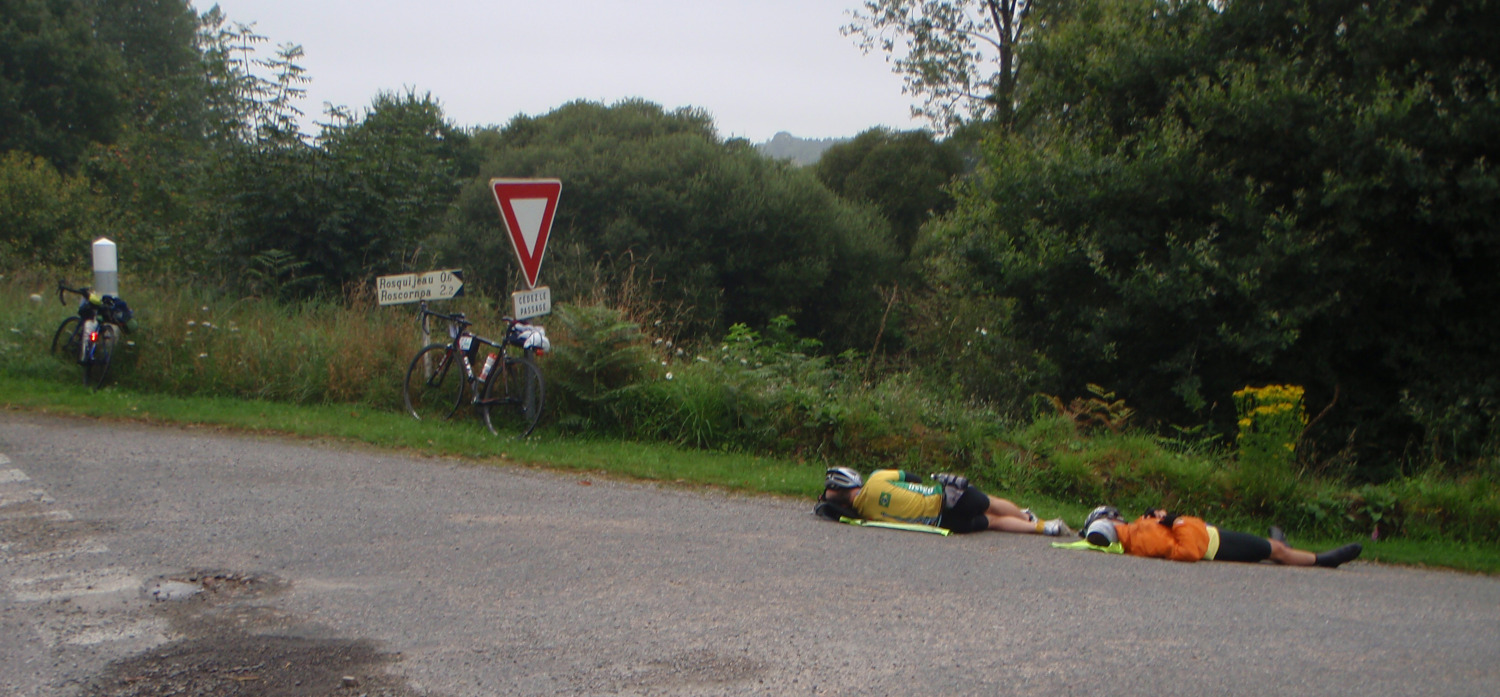
Recovery position for a randonneur

Four other riders notched their first 600K, but without other rides needed to complete a 2023 SR.

    Andrew Crooks
    Jeryl Jamir
    Sophia Lofaso
    Humberto Sanchez

Greg Lang completed his first Pennsylvania SR series, including the 600K brevet, on a fixed gear, joining an elite club of very few riders who have ridden a PA SR series fixed. Greg rode the entire series on a fixie with no brakes. To our knowledge, this is the first time ever that audacious feat has been accomplished.

The man, the gear.

Pat and Cece Gaffney recorded their sixth PA SR, tying them with Greg Keenan and Guy Harris who have achieved this perfect and amazing number -- but, yeah, you still need three more SRs to equal Bill Olsen's nine PA SR series completions.

Unlike last year when only one lonely rider rode the companion 200K event on Sunday, this year there were 23 riders that clipped in for the 200. By my count, nine of these TK 200K riders were completing their very first brevet. Welcome to randonneuring! I hope you took note of those brave souls riding the 600K by your side -- checking in with them at the South St Bridge and other photo controls. Day 1 for you,  day 2 for them, 400K already in their legs. Newly minted randonneurs, I ask you: do you see a longer brevet in your future?  I think maybe so. Several of the 200K riders rode in from NYC to the start! I saw many strong riders in this batch of newcomers.

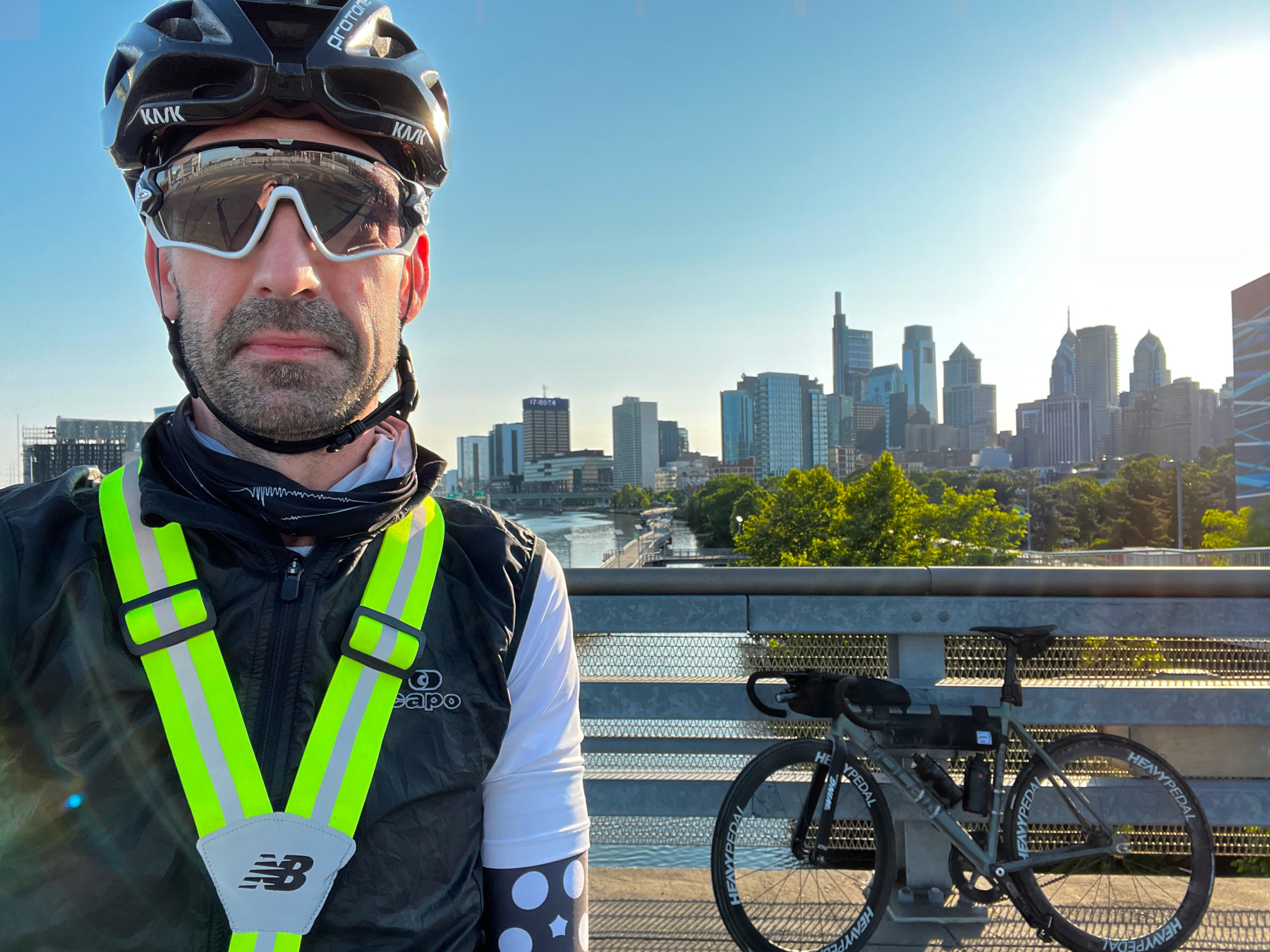
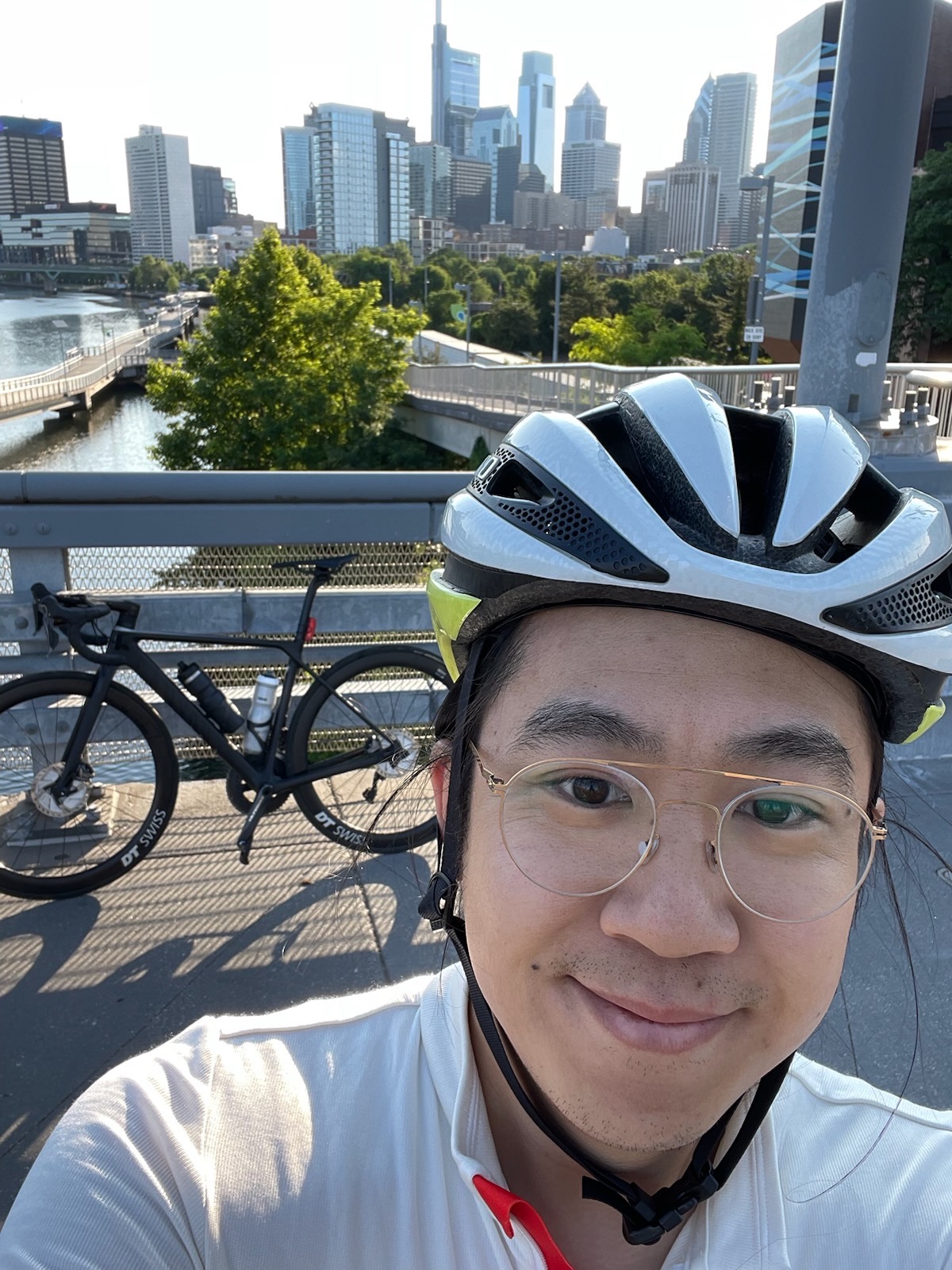
The South Street bridge is a perfect spot for a skyline selfie.

Some of the TK 200K riders provided direct camaraderie for 600K riders on their second day. Amanda Jones Layman completed her first 200K brevet as she kept company with her partner Brad Layman who was finishing up his third PA SR series. Ben Swartz from DC rode the 200K along with his brother Noah Swartz who came from California to ride the PA 600K.  

Also riding the 200K was Annie Gibson who completed a 2023 SR with this ACP event along with a PA 300, 400, and NJ 600K.

Congratulations to the Super Randonneurs, 600K finishers, 200K finishers, and all the riders attempting all or part of this difficult event series. And a super randonneur thanks to all the volunteers that made it possible.

    Ben Keenan (Gear Schlepping and cleanup)
    Nicole & Soph (Monday cleanup)
    CJ Arayata (Grocery run)
    Annie Gibson (Overnight)
    Ryan Stannis (Gear schlepping)
    Anton Linberg (Diplomatic liason)
    Walt Pettigrew (Gear schlepping)
    Len Zawodniak (Road angel) 

And of course Iwan Barankay as the tireless event organizer, who took time out from invading other countries to  work  50+ hours straight without significant sleep, taking on jobs he wasn't expecting to do, all without complaint,  and generally making sure the event ran as smoothly as a German train schedule (and even more importantly, Iwan compiled the finish results so they could be available for PBP registration ASAP). All kidding aside, Iwan, from the bottom of my heart I thank you for your service with this event. Without you, it truly would not have been possible. 

Well done and thanks to all these critical volunteers. Indeed, we couldn't have run the event without them. You may be tired of hearing it said, but vol...

Like the NPR fund drive that seems to be on the radio constantly. You know, the one we automatically tune out mentally -- selective deafness. Begging for help on rando events is almost like that, it seems. Unfortunately, unlike NPR, PA Rando doesn't have a full time paid staff and sources of funding from the government and special interests. We aren't Grand Fondo. We aren't Bicycling Magazine. Unlike those organizations, if you don't help out, we actually won't be able to continue with the events you love. So, no shit, in total seriousness, if you enjoy the kind of events PA Rando puts on: events in Philly, events that are accessible by public transit, events with low cost lodging options, good food acceptable to troubled, ethically constrained, and famished omnivore stomachs alike, with road angels that appear just when you need them most, then you, YOU, YOU need to step up as a vol... blah blah, <click!> hey Harold,  let's switch to Spotify till the NPR begging ends ... unteer organizer.  Organizers are people with good resource management skills, people who can solve problems, who can improvise, adapt, overcome. People who can take criticism and either grow from it or ignore it. These are EXACTLY the qualities most randonneurs posses. There's no instruction manual, but any rando who's had more that 3 hours sleep and  who's ridden several PA events should be able to figure out what needs to be done to run an overnight control or a whole event. Be an event organizer, or at least organize an overnight control.  Want to design routes, design a route! Take criticism for your design and fix it. Then organize an event that features your route. Wrangle help from other people. If you want these events to continue then you <click!> la, la, la, la... do you like PiƱa coladas...

...unteers are essential to these events -- especially people willing to be organizers of an entire event, or of an overnight control. If you are an experienced randonneur who hasn't been an event or overnight organizer (or hasn't lately) please consider giving back to the sport by taking on a significant organizer responsibility for a brevet We have the EM1000K coming up. This will need good volunteers. Is this your turn to help out?

We now return to our regularly scheduled ride report.

Even more photos here.

Ben Keenan writes....

Thanks Iwan, Chris and all volunteers (Len, Annie, all others and a sizeable bunch of people who pitched in) for putting together the ride over the weekend. It was a another grand adventure! The moments are still sinking in: rolling under tulip poplars in bloom, riding beside tall grass along the back roads, hearing the water running over the rocks along the Lehigh, feeling the stillness just before the sun comes up and it’s just you and the birds and the road. These rides have a way of filling you up at the same time they take everything you’ve got, but I think the filling up part is the one that stays. It’s bittersweet to see the series end. This was a really good group and thanks a million to everyone that shared the miles for your unfailing courage and good humor. Keep riding and hope to see everyone on future rides soon!
Bill Scanga writes... 

Hey I’m feeling that post ride life affirming stuff today and the randonesia is helping me prepare for PBP already. I wanted to thank you all for the hard work you do keeping this group together. What a great group. We couldn't do any of this with out you. I really appreciate what you do and look forward to being a volunteer myself. 

Thank you thank you thank you

Brad Layman writes....   

Iwan and Chris, thank you for putting on this great event. You both put an incredible amount of effort into this event and series. I am proud to have completed another SR series but sad that it is over. This 600 was a memorable one. I really enjoyed the route and challenging climb up to Penn's Peak. It was special to ride the series with old and new friends. Finishing the 600 and series with Amanda on the Tscheschter Kaundi route, surrounded by friends and in perfect weather has got to be my favorite rando memory. Hope to see everyone again on a ride soon.   Photos here.

Pat and Cece write...

Thank you for organizing the 600 this past weekend. It was a lovely ride. While on paper it didn't seem to be too tough, it really packed a punch. Particularly the climb up to the top of Penn's Peak. Our plan of going straight through went a little arry, but in the end leaving early on the second day worked out for us and gave us some valuable information, like sleeping is good. Many thanks again to you, Annie, Chris, Anton, Ben, Len, and anyone else we are missing who worked so hard to put this event together.

Iwan Barankay writes...

I want to thank all the riders for coming and riding. It would have been so weird if nobody showed up! Seeing you come in at night, feeding you, and getting (kicking?) you out the door again the next morning was a pleasure. Finally seeing you roll in, some in pain, many with smiles, and some with tears of triumph was just epic and a joy to see. It was also great that we had this nice space for you all to hang out for hours after the event to debrief and relax. I hope to see you all again at the next one!

Next, I also want to thank all the other volunteers who selflessly stepped in and went above and beyond. Special mention here goes to Chris, our RBA, for a continued vision for the club and its events and for taking a leap of faith by running the SR series entirely from Philadelphia.


The 2023 SR Series now in the books, PA Randonneurs continues with it's traditional monthly series of R12 events all of which will be free of charge for PA Rando club members. On deck are the Free Bridge 200K and the gravelly, climby, ultra amazing Grand Canyon of PA 200K that includes a stream ford (which may turn out to be nothing if the drought continues).  On the horizon is the Endless Mountains 1000K.


Tuesday, May 30, 2023

Jim Thorpe 600K (and TK200) Course Notes

The latest cue sheet for the Jim Thorpe 600K is version 7, and the latest RWGPS route was modified 2023-05-30 12:55:20 EDT.  Both are available online.  Note that some GPS units may have trouble with the size of a full 600K route. Please download and test-activate the 600K route data before the event to make sure your GPS unit can handle the full route. If not, a RWGPS route for Day 1 of the 600K is available here.

Day 2 of the 600K is the same as the edition of the Tscheschter Kaundi 200K that we will start at 6:30AM Sunday. The TK route was slightly modified from the route we rode last Fall because Cafe Metzler is unavailable. There is now a postcard control in Christiana. Make sure you have the latest version of the TK cues (Version 3) and the latest RWGPS data (last modified 2023-05-18 12:41:09 EDT).  Both are available here.

Full information for the  600K. and 200K are on the respective event websites.

Course Notes

Although no full pre-ride of the Jim Thorpe 600K has been conducted, we believe the course is in good shape. Brad Layman conducted a partial pre-ride of the Day-1 600K route, verifying the routing over Penn's Peak, through Jim Thorpe, and back on the D&L.  The day-2 600K route is the same as the TK 200K route we rode late last year.

Riders of the Jim Thorpe 600K should be aware that the Penn's Peak climb is a difficult, trafficky climb. After you pass Fairyland and begin the climb in earnest up Indian Hill and Maury Rd, you will encounter sections of road with narrow shoulders, very fast traffic, and limited sight distance. On a hot day, hyperthermia is a real possibility on the exposed sections. I have done this climb/descent several times myself and believe it can be completed safely if you take proper care. My recommended strategy for safely reaching the top is to ride in a gear that allows you to climb with your best climbing form. If your form starts to deteriorate,  take advantage of the occasional side street or wide shoulder. Stop for a moment as necessary, have some water, collect your wits, regain your best climbing form, and power on up the mountain. This is not a climb for zig-zagging in a paperboy style or honking erratically like some leathery TdF sprinter. You want to channel your inner Johan Museeuw and climb smoothly and predictably on the limited shoulder so the drivers in cars going 100 mph can send their text messages while still missing you.

When you reach the top of the climb, reflect for a moment about how Edward Marshall might have felt when he reach the same spot, having just run about 65 miles doing his part in the great PA land swindle of 1737. One of his fellow runners, Yates, went blind then soon died. The other runner, Jennings, had serious injuries, lived, but never fully recovered.  I don't fault the runners -- just hired hands (who were never paid). Nevertheless the Lenni Lenape felt differently and Marshall's family was killed in retribution a few years later. 

These sobering thoughts in mind, prepare for the big decent into Jim Thorpe, PA. 

My recommendation for the descent is to take the lane firmly. Using your best descending form, bomb down the hill at just under the top speed of your Guardian Angel. Again, do not be erratic. Take the lane smoothly and solidly to force passing vehicles to consider your existence.  Remember that Jim Thorpe's grave, a control, is on the right, about 2/3 of the way down the mountain. Be ready to stop for this. It's well marked.

When you reach the bottom of the mountain, you'll cross the Lehigh River and T-left into the town of Jim Thorpe. Here the course turns right before the Molly Mcguire pub, and has a small tour loop of the town with a photo control at the Old Jail.  Please be alert for car doors and nutty pedestrians when touring the town. Personally, I recommend the Marion Hose Bar over Molly McGuire's, particularly because the Hose Bar has good outdoor seating. There is also a bike shop in town, immediately next to MM's.

After finishing the tour-loop of Jim Thorpe, please walk your bike cautiously through the mess that surrounds the Train Station. Once you are past the tracks, turn right onto the D&L trail, cross the bridge over the Lehigh, and begin riding again. 

The remainder of the course is a generally moderate return to the overnight control.  Because there are no timed controls day-2 (other than the finish) almost all riders should be able to finish the 400K first day with enough time to get reasonable sleep and finish the scenic TK 200K on Sunday. 

Bonne route et bon courage! 


Thursday, May 18, 2023

New Rider 600K FAQ/HOWTO

Welcome to the adventure that is a 600. A 600 may be your first multi-day event so this is a step up from all previous events in that the challenge is to reach the overnight and then to get up again to keep on riding. 

You know how shorter brevets work from riding the 200, 300, and 400K distances. You've learned about managing your resources, staying hydrated, staying fed (in the face of possible nausea), maintaining in a good core temperature (despite the vicissitudes of weather), how to set up solid, practical lighting and reflectivity, how to  gather in groups for many hours of night riding, how to be efficient at controls, how to abuse caffeine, magic gum, and a cappella to battle sleep deprivation, and  how to manage psychotic mood swings over a 24 hour stretch of crazy stresses. 

But now the 600K has an overnight. What's that mean? How does that change things?

It doesn't change anything, really. The amenities at the overnight (paid for by your entry fee) are there for your convenience. Use them. Of course, you can think of the overnight as just another control. You can ride on through, only stopping at the overnight control long enough to have your card signed. 

Nevertheless,  most riders will want to take advantage of the conveniences afforded by the overnight control. You aren't required to sleep at the overnight, but most riders will want to sleep there. Also,  there will be a bunch of hot food at the overnight, and a volunteer willing to serve it to you. Certainly eat something at the overnight.

Q: Can I book my own hotel and sleep earlier than 400K?

A: Yes, but sleeping a few hours at the 400K distance of a 600K is a success-oriented strategy. It also works for longer brevets. You should get used to riding 400K the first day.  Many will finish the first 400K not long after midnight, which is a good time for most people to sleep.  Laying up after only, say, 300K may have you trying to sleep before sunset, which doesn't really work for people. That is the general rule. In many other countries or regions, no support is provided at multi-day events and it is up to the rider to figure out where or how to sleep and it is left up to them to ensure they don't miss the cutoff time for controls. Even so, left to their own devices, riders still seem to choose 400K+ for their first sleep.

Q: But what if I'm REALLY sleepy?

A: Then STOP and sleep somewhere, dammit!  Find a nice bench on a porch, or in a church, a table in a park, a PO lobby, or a heated public bathroom, or city council meeting, or curl up on some soft, dry grass, or do the tripod nod-off seated at a 24 hour diner or convenience store. Grab enough sleep so your head clears and you can continue riding safely. Then get a full sleep at the overnight.  Obviously, don't sleep in places that are dangerous or will get you arrested (or worse). But randonneurs do develop a cultivated eye for finding safe spots for a stealth "ditch nap". It's easier than you'd think.

Q: When do I have to arrive at the overnight? When can I leave?

As with any brevet, controls have opening and closing times. You are responsible for ensuring you arrive at control after it opens and before it closes. Open times won't be an issue for most people. But everyone must reach the Chamounix overnight before the cutoff (which for the 600 is at 6:16 AM). This won't be a challenge for you; I predict you will arrive not too long past midnight. How much you sleep or rest at Chamounix is up to you, but if possible, try to get a couple meals, maybe a shower, and at least 3+ hours sleep. That takes about 4 hours if you are efficient.

There will be no timed controls on day-2 of the 600K, other than at the finish. This gives a lot of flexibility in sleep scheduling.  You still need to complete 600K in under 40 hours, but  the lack of timed controls day-2  means that you can sleep past the cutoff time of the overnight control without fear of missing the close time of the next control. You have a whole 200K to make up that lost time. If you can ride a 200K in 10 hours (when tired) then that means you have 3.5 extra hours to play with. Last time we ran the TK 200K route, the slowest rider took just over 12 hours. So I expect that everyone will have at least one bonus hour past the overnight close time.

Tell the staff volunteer at the overnight what your sleep plans are. That volunteer will sanity check your plans and help you get back on the road safely and at a time best to achieve your goals.


Wednesday, May 17, 2023

NEW START LOCATION for The Jim Thorpe 600/200

The Start/Finish, lodging and parking for the Jim Thorpe 600 / TK 200 has moved slightly. It's now at the Chamounix MANSION building -- the building on the right, partway around the islet. It's NOT at the carriage house, where we were previously. The Mansion is a larger, more elegant building with many more amenities that I think riders will really enjoy. Details on the event web pages, including PARKING INSTRUCTIONS have been updated.

Tuesday, May 16, 2023

Four State 400 & Chamounix Classic 200 Ride Reports

The third event of the 2023 Super Randonneur Series, the Four State 400, and the Chamounix Classic 200 are in the books. The report for the 200, written by organizer Chris Nadovich, is located below the 400 report.

Four State 400 Ride Report

24 riders clipped in for the 400 on a warm and humid morning, with rain on the way. Of those 24, 20 finished the challenging route. Along with the two pre-riders, we had a total of 22 finishers and a finish rate of 85%. Congratulations and well-done! It was a valiant effort by all riders. Please take a look at the preliminary results and let me know if anything does not look right. The results will be submitted to RUSA after review and will become official once certified.

The nerves were palpable at the start. Not because of the wet weather that was forecasted. That was nothing, as many of these riders had dealt with some kind of unruly weather earlier this spring, from torrential and unrelenting rains to tornado warnings and hail. The nerves were due to the amount of climbing they knew was coming. The route involved over 16,000ft of climbing, including several hills with intimidating grades. In an attempt to calm the nerves, the pre-riders offered their advice of using the descents to relax for a few moments, eating at every control, and enjoying the scenery as a distraction.

Marcus Mommen had his Bird-in-Hand postcard ready to go. (Photo by Marcus Mommen)

Riders loaded their packs with snacks such as ham sandwiches, leftover pizza, sports bars of all kinds, Cheez-Its, Uncrustables PB&J, Swedish Fish, and bags of spaghetti. Others kept their loads light and planned to stop at the numerous Wawas and Turkey Hills along the route.
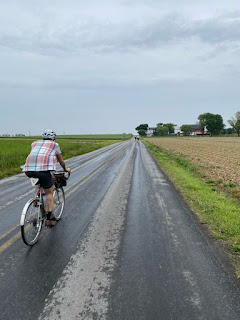
Tommy Green rides on a damp Lancaster road. (Photo by Ello Shertzer)

After a dry start, there was a light rain that persisted throughout the rest of the morning. The only weather-related issue reported was the messiness of some roads in Lancaster, as the roads frequented by horse carriages were covered in wet horse buns. Once riders reached the Schuylkill River around the halfway point, the rain subsided. Riders either had to dry off or layer up by the time the sun went down and temperatures dropped.

Rider Iwan Barankay experienced a busted rear derailleur cable near the Hockessin DE control. Despite help rendered by an experienced bike mechanic who was along on the ride, Iwan was only able to rig his gears to use the 14 tooth cog of his cassette with his two chainrings in the front (46/30). This made for some tough riding on the hilly route. Chapeau Iwan!
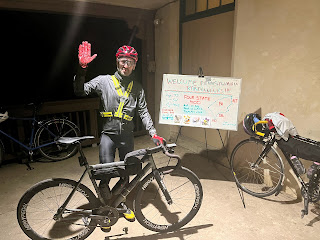
Greg Lang and his fixie with no brakes

Another rider impressed everyone with his completion of the event with limited gearing. As he has on the other rides of this SR Series, Greg Lang rode a fixed gear bike with no brakes. Not only did he tackle the course successfully, but he was the first finisher! Greg had to climb up the steep ascents with only one gear and then was not able to enjoy the reward and relax on the long descents like everyone else. Riders and volunteers were blown away by his strength and ability to safely navigate his bike without brakes through a ride that lasted all day and well into the night. Chapeau Greg!

An impressive number of riders completed their first 400k: Nicole Aptekar, Tristan Dahn, Annie Gibson, Jeryl Jamir, Chris Kline, Bryce Lackey, Greg Lang, Marcus Mommen, and Ello Shertzer. Congratulations to all! Jeryl not only completed his first 400, it was also his first brevet. What a brevet to pick for your first one! He left no doubt about his ability to ride and climb. Chapeau!
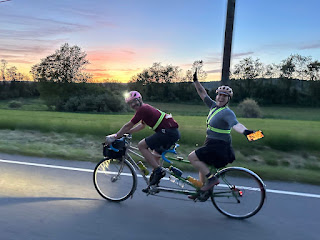
Pat and Cece Gaffney (Photo by Gavin Biebuyck)

There were quite a few experienced randonneurs in the pack who added another 400k to their resume: Iwan Barankay, Travis Berry, Gavin Biebuyck, Adam Bowen, Alex Estes, Cece and Pat Gaffney, Tommy Green, Ben Keenan, Bill Scanga, Ryan Stanis, Ben Thompson, and yours truly. They helped the rookies along the way with advice and steady hands, and legs.
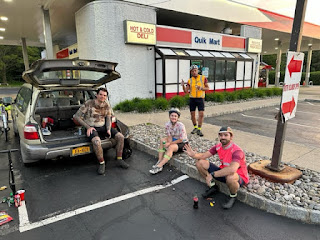
Riders enjoying pro-level support from Amy and Anton at the Bloomsbury control. From left to right: Chris, Annie, Bill, and Adam. (Photo by Anton Lindberg)

Randonneurs Amy Lippe and Anton Lindberg volunteered for the event and met riders at the Citgo Bloomsbury NJ control (around 300k). Having support from experienced randos like Amy and Anton at this point in the ride was critical. Darkness was setting in and riders were beginning to feel the toll of the climbs. Once riders filled their bottles and received their pep talks, they headed out to conquer the final big climb of the day on Staats Road. Amy was going to take part in the pre-ride but unfortunately came down with a cold the day before the ride. We hope to see her on the 600 next month.

Several experienced riders, Mario Claussnitzer, Wilson Wilson, and Kate Sparacio, abandoned the ride before the halfway point, knowing they weren’t feeling it. It takes wisdom from lots of experience to be able to make that call. Rider Sophia Lofaso abandoned in Doylestown (with about 30 miles to go) as they experienced difficulty keeping their eyes open. Understandably, Soph expressed disappointment afterwards and realized that there was enough time left for a ditch-nap. However, we know that Soph has the strength to complete this kind of ride and this experience will fuel their motivation in the next brevet. Soph should also be proud of completing almost all of the climbing of this route since there wasn’t much climbing left after Doylestown.

Thank you to all of the volunteers who helped make this a successful event. Chris Nadovich, the club RBA, helped with the route and event planning process, and helped with the start and finish of the event. He even found time to ride the Chamounix Classic 200k in between. Ben Keenan participated in the pre-ride and then drove to Philly in the early morning hours to help with the start of the event. Ben is an excellent partner to have on a challenging pre-ride. Iwan Barankay helped with event planning (while organizing all the other SR Series rides!). Phil Mitchell drove in to help with the finish - we hope to see him as a participant in a brevet someday soon. Bill Olsen was on standby in New Jersey in case anyone needed support. And thank you again, Amy and Anton, for providing crucial support along the course. David Coccagna helped with setting up the food and drinks for the finish. Many riders helped with cleanup on Sunday: Ello Shertzer, Alex Estes, Jeryl Jamir, Nicole Aptekar, and Soph Lofaso. Thank you to Gavin Biebuyck for tagging along with me on one of the course scouting rides over the winter and helping to improve the navigation through Oley Valley. If I forgot anyone, I apologize -  please let me know and I will add your name to the report.

Join us again on June 3 for the grand finale of the SR Series, the Jim Thorpe 600, and on June 4 for the Tscheschter Kaundi 200. These rides will again start and finish from the Chamounix Hostel in Philadelphia. Details and registration are on the PA Rando website.
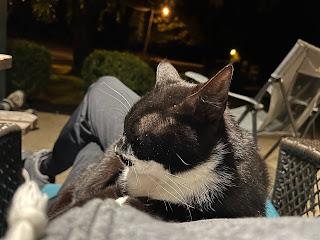
Remember that Rando Cat will always be waiting for you at the finish.


Chamounix Classic 200 Ride Report, by Chris Nadovich:

Three hours after the 400K riders departed, the 200K set out at the much more civilized start time of 7AM. The course was the "Chamounix Classic", which was the first full brevet course we ever developed for a Philadelphia start/finish, and first ridden at the edge of COVID. Iwan did most of the route design for this. It's a true classic.

I had forgotten how beautiful this route is. It exits the city through lightly travelled residential roads through the Main Line, which is a very welcome change from Manayunk or the Northeast. There was a light drizzle falling for most of the morning, but this did not detract from the beauty, especially from Goshen Rd on through Chester Springs. I rode with Ken Cappel for some miles, and he commented that it was the best smelling ride he had done in a while, what with the lilacs, honeysuckle, and other fragrant flowers in full bloom.

All was well till we reached the Perkiomen Trail. There we discovered the entrance was closed as the bridge over the Perkiomen Creek was under construction. Who knew? This is the sort of problem that crops up when there's no pre-ride. In any case, riders all seemed to find their ways around the impassable bridge, only to puzzle at the ambiguous info control question immediately beyond.

Then it was trail riding for many, many miles. Much of the Perk trail was once paved with non-newtonian fluids resembling sand and gravel but with significantly more magical properties that would suck wheels this way and that. Most of that is now gone, replaced with solid blacktop. I have mixed feelings about the "improvement" as it has attracted more walkers, ebikes, roller bladers, and baby carriages. 

When I reached the SRT, I rode with a bike tourist who had started in Key West this past April and was headed to Portland -- first ME then OR. As we rode past the "fragrant" sewage plant I thought of Ken Cappel's previous comment about the smells on this brevet.

The final bit of trail in the route took us over Forbidden Drive along the Wissahickon. I think all the magical wheel-bewitching material from the old Perk trail was moved to Forbidden Drive and mixed with an equal part of 3-inch rock fill. What a decidedly UN-pleasant riding surface! The only bit of enjoyment I experienced on FD as my sore butt bounced down that path was when I barged into a wedding celebration spread across the trail in Valley Green.

After that it was the last little grunt up to Chamounix where I was greeted by Brad Layman who was staffing the 200K finish. Thank you SO MUCH Brad for your excellent work organizing the 400K and also helping with the 200K. 
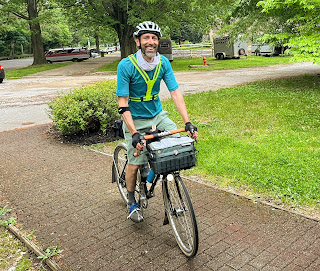
Mike Reali Jr at the 200 finish

Looking over the finish sheet I was happy to see several riders who completed their first 200K. Sara Johnson, Jonas Schaller, and Michael Moote (who previously rode a 400K but nothing shorter?!)

Wednesday, May 3, 2023

***Update (#2) with Course Notes: Introducing the Four State 400

***Update #2:

The cue sheet and RWGPS files were updated again with minor changes in order to make a few cues clearer. The cue sheet is now Version 14 and the RWGPS file is up to date as of 2023-05-11 12:59:49.


***Update from pre-ride:

On May 6, Ben Keenan and Brad Layman completed a pre-ride of the Four State 400. The weather was absolutely beautiful - a nice change from the soaked April events. Here's to the saying "April showers bring May flowers" and not just more showers.

Pre-riders Ben Keenan (left) and Brad Layman (right)

We are happy to report that the course is full of scenery--farms, hills, and creeks--and a variety of terrain to enjoy. The climbing is intense and challenging. We found the second and third 100k to be the most challenging sections. Do not plan to set any personal best times for the 400 and do not estimate your finish time based on other brevets with less climbing. Take your time on the climbs and rest at the controls. Seriously, throw out any preconceived notions about how fast you think you should go. But remember that for every climb, there is a descent. And this route is full of winding (but not too steep) descents that you can coast for several minutes.

Ben Keenan with his signature messenger bag

Eat early and often. Riders are strongly encouraged to prepare for the intense climbing by coming to the event well-rested and prepared to refuel throughout the ride. Get good sleep on Thursday night and eat a big breakfast at the start of the event. Refueling at the controls - especially in Birdsboro, Coopersburg, and Bloomsbury - is critical. Yes, get that donut. And another one for the road.

There are several other convenience stores that provide standard fare but options for different times to eat along the route: Landhope Farms in Oxford PA (mile 75); in Bird-in-Hand (postal control) there is a Turkey Hill (mile 95) and the Bird-in-Hand Bakery (mile 97); an Exxon in New Holland (mile 105); an Exxon in Riegelsville (mile 176); across from the Citgo control in Bloomsbury are two truck stops, with a Burger King and Subway (mile 186); Milford Market/Citgo (mile 195); Wawa in Doylestown (mile 219); Wawa in Lafayette Hill (mile 239).

The ride out of Philly in the early morning hours and the late night return to Philly should be quiet. The route is made up of many tranquil roads with little traffic; the busiest are mostly around the controls, but riders won't be on any of them for long. When possible, depart controls with other riders for at least a couple of miles to navigate through the busy sections and increase your visibility on the road. On the pre-ride, Lancaster seemed to have the busiest roads, particularly around Bird-in-Hand. When encountering traffic, be visible, assertive, and communicative, and remind yourself that peaceful roads are coming up soon. Riders should especially stick together after the penultimate control in Bloomsbury to ride the final 100k in the dark.

The trees and flowers are in full bloom and lovely. Be prepared if you suffer from allergies. The fields in Lancaster County are ripe and smelly including unpleasant odors from burn piles.

Staats Rd at sunset

Sunset provided a nice distraction while climbing Staats Rd on the pre-ride. The descent after the climb and the ride back to Philly was in the dark. The temperature dropped very quickly during that descent. We experienced varying temps in the early morning hours and after dark, with chilly air around creeks and rivers. Be prepared to be strategic with your clothing so you don’t overheat on the climbs or get cold on descents. Removable arm sleeves, zip-able vests, and other easily removable gear is very helpful. After a full day of riding, 50 degrees at night feels a lot colder than it did in the morning.

Fog encountered in the Brandywine Valley. Temps were significantly cooler along creeks and rivers in the morning and at night.

Most of the roads were quiet and easy to navigate at night. The busiest road we faced in the dark was River Rd/NJ-29 from Milford to the Lumberville Bridge. There was less traffic on this road than what you see during the day, and there is a wide shoulder along most of it. Be prepared for significant riding in the dark by wearing your reflective vest and ankle straps and having your lights charged. Again, group up with other riders at the Bloomsbury control to ride the final 100k in the dark for increased safety.

The cue sheet (version 11) and RWGPS file (updated 2023-05-8 15:21:49) reflect the changes based on the pre-ride. It is recommended that riders break up the route into smaller sections to download to your device. We split it into two halves by using the Birdsboro control as the halfway point. There is cell service on most of the route. There were stretches without cell service but they did not last long.


***Chamounix Classic 200 Notes:

A pre-ride is not planned for this event. Iwan Barankay reported a fallen tree on the Lincoln Drive Trail near mile 123. It might be cleared out by the day of the event, but keep your eyes out in case, especially if riding this section at twilight.


***Original Post:

The 2023 ACP SR Series continues with the Four State 400, which will be held on May 13.  Registration is open until 11:59pm on May 6. Details are available on the PA Randonneurs website.  The event starts and finishes at the Chamounix Carriage House in Philadelphia and will take riders through Pennsylvania, Delaware, Maryland, and New Jersey. It is a new route that features several areas known by PA Randos, including the Brandywine, Lancaster County, Oley Valley, the Reading Prong, Bucks County, and the hills around the Musconetcong Gorge in NJ.

A pre-ride is planned for May 6. This blog post will be updated with a course report following the pre-ride.

The new route contains a lot of climbing. For riders who are nervous about the amount of climbing, it might help to break the route into smaller sections. The biggest climb of the route is at the beginning of the final 100k with a climb over Staats Rd. After that, there is a long flat section on River Road followed by some gentler hills on the way back to Philly.

Section
(km)
Total Climbing
(ft)
Biggest Climb
(ft)
0-100
4,450
241
100-200
4,550
455
200-300
4,400
515
300-400
3,600
537
Total
17,000
537

The ride organizer conducted course scouting rides over the winter during the route planning process by breaking it into two halves. During these rides, the first 200k was found to be pleasant despite containing more than half of the overall amount of climbing. The second half contains the steepest climbs, including Oysterdale Rd out of Oley Valley and Staats Rd over Musconetcong Mtn. These climbs will be challenging given their distance into the ride, so be sure to save energy. More details and tips to come in the pre-ride report.

We will also be offering a 200k event for those not wanting to tackle the challenge of a 400k. The 200k route will be the Chamounix Classic. Registration for the 200k is open until 11:59pm on Wednesday, May 10.